

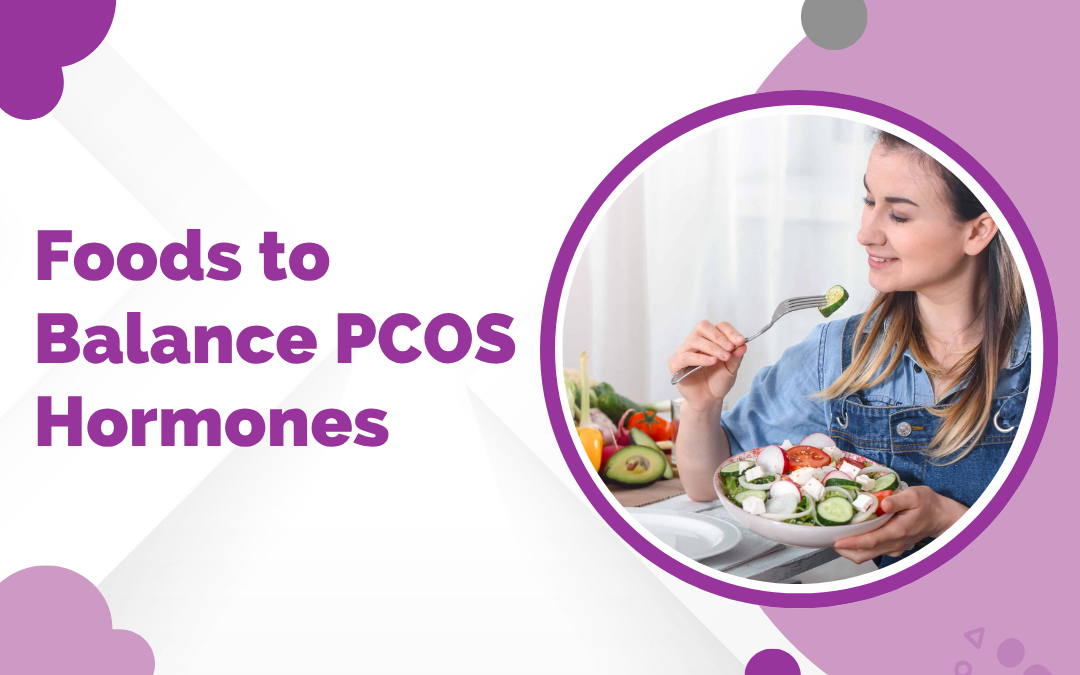
The right foods target the two drivers behind PCOS, insulin resistance and chronic inflammation. Omega-3 rich fish like salmon lowers testosterone and inflammation, high-fiber vegetables and legumes stabilize blood sugar, cinnamon improves insulin sensitivity, and fermented foods like yogurt support the gut bacteria that regulate estrogen metabolism.
According to Dr. Manisha Mehta, IVF Doctor in India, “I put every PCOS patient on a food-first protocol before we even discuss medication, because in my clinic the women who fix their plate first respond to treatment faster than the ones who skip straight to drugs.”
Which Foods Actually Help Balance PCOS Hormones?
ASRM lists nutrition as first-line PCOS treatment. Most patients walk in expecting a prescription and walk out with a grocery list instead, which tells you how seriously the medical community takes food as intervention for this condition.
- Omega-3 fish: Salmon or mackerel twice a week brought down testosterone in PCOS trials more reliably than most supplements sold for the same purpose, and vegetarian patients adding ground flaxseed to morning dahi daily saw comparable results within 8 to 12 weeks.
- High-fiber foods: Dal, rajma, chana, oats, sabzi-heavy thalis, meals most Indian kitchens already serve without realising they are doing exactly what a PCOS body needs, and women eating this way as habit rather than diet show different hormonal panels within two to three months.
- Cinnamon and turmeric: Half a teaspoon of dalchini in morning chai for 12 weeks improved insulin sensitivity in published trials, and haldi which Indian women cook with daily without thinking of it as medicine works on the inflammatory pathways keeping insulin resistance locked in place.
- Fermented foods: Homemade dahi, chaas, idli batter, dhokla, kanji, preparations Indian grandmothers served for generations that clinical research now confirms support the gut bacteria responsible for estrogen metabolism, and when those populations get depleted by packaged food the hormonal imbalance worsens through a pathway standard blood panels miss.
Indian thali meals already mirror Mediterranean eating naturally. Women who address diet early alongside IVF treatment in India see better ovarian response than those who treat food as secondary.
What Eating Patterns Help PCOS Beyond Just Picking the Right Foods?
Most women get the food list right but eat in patterns that undo the benefit, and fixing the pattern matters as much as fixing the plate.
- Low-GI swaps: Brown rice for white, jowar roti for maida naan, steel-cut oats for instant, and patients who make these swaps consistently report glucometer readings changing within weeks, which is when they finally believe carbohydrate type matters as much as quantity.
- Pair carbs always: Roti with pickle spikes insulin fast but the same roti with dal and sabzi keeps it flat, and this single habit of combining carbohydrates with protein or fat changes blood sugar graphs more dramatically than patients expect from something requiring zero supplements and zero money.
- Meal timing: Skipping breakfast to rush to work then overeating at lunch sends insulin through the roof for the rest of the afternoon, and this specific pattern is the most common metabolic mistake Indian working women with PCOS make, which is also why intermittent fasting backfires for this condition despite working for other problems.
- Cut triggers: Samosas from the canteen, chai loaded with sugar, cream biscuits between meals, cold drinks with lunch, the daily habits most Indian PCOS patients share, and cleaning them up 8 to 12 weeks before IUI treatment or medicated cycles measurably improves ovarian response to stimulation.
Women managing PCOS and weight loss alongside fertility need changes serving both goals at once. Any good IVF center in India includes nutrition counseling as part of the PCOS protocol.
Why Choose Dr. Manisha Mehta?
Dr. Manisha Mehta has over 20 years treating PCOS patients with an 85% IVF success rate, and she includes dietary optimization as standard because women who fix insulin resistance through food before starting fertility medication consistently achieve better ovulation rates and faster conception timelines. Recognised among the best IVF specialists in India for her metabolic-first approach, she treats PCOS as a systemic condition that responds to dietary intervention in ways medication alone often cannot match.
Call Now: +91 91680 39000
Your recovery is personal. Let us keep it that way.
Book Your Personal Post-Op Review with Dr Manisha Mehta
Frequently Asked Questions
1. What is the single best food for PCOS hormone balance?
No single food fixes PCOS, but omega-3 rich fish combined with high-fiber vegetables produces the most consistent hormonal improvement.
2. Does cinnamon really help with PCOS?
Studies show cinnamon improves insulin sensitivity and menstrual regularity when consumed consistently over 8 to 12 weeks.
3. Should women with PCOS try intermittent fasting?
Most specialists advise against it because the fasting window often worsens blood sugar instability and insulin resistance in PCOS.
4. How long do diet changes take to improve PCOS symptoms?
Measurable improvements in insulin, androgens, and cycle regularity typically appear within 8 to 12 weeks of consistent changes.
You deserve answers from a doctor who knows your case.
Whether you are worried about a symptom, overdue for a check-up
I am here, and I am listening.
Talk to Dr. Manisha Mehta. Book Your Consultation Today.
Medically Reviewed by

Dr. Manisha Mehta
Gynaecologist & Obstetrics Specialist,IVF Doctor in India
Specialisation: Minimally Invasive Gynaecological Surgery | Women’s Health | Post-Operative CareApex Hospital -Sirsa, Haryana | Serving Delhi NCR, Haryana & surrounding regions
Reference link:
- Role of diet in the management of polycystic ovary syndrome
https://pubmed.ncbi.nlm.nih.gov/25193199/ - Effects of omega-3 fatty acids on hormonal and metabolic parameters in women with PCOS
https://www.ncbi.nlm.nih.gov/pmc/articles/PMC5477157/


Gave maxwincasino a whirl. Their selection of games is impressive, and the bonuses weren’t too shabby either. Had some decent wins. Might become a regular here! maxwincasino
So, tried SV388 10naga! Site’s a bit different with the cockfighting, but it’s exciting! Definitely a unique experience if you’re into that. Proceed with caution, as always! sv388 10naga
Checked out x777live. The live casino games are pretty cool, and the dealers are alright. Makes it feel more real. Worth a look if you like that kind of thing anyway. x777live
Yo, just downloaded spinwinapk and it’s pretty slick! Easy to use and seems legit. Gonna see if I can actually win something big, fingers crossed! Check it out at spinwinapk.
Alright, heard about tik88bet and decided to give it a whirl. The layout’s clean and the games are decent. Hoping for some luck tonight! Give it a shot, eh? Find them at tik88bet.
Yo, logging in to tmtcashlogin was a breeze. Seriously, no hassles. The interface is pretty good, too. Let’s hope the wins keep coming my way! You can access it at tmtcashlogin.
Yo, OK Bet.cc is my go-to! They always got the best odds and the site’s super easy to navigate. Check it out ok bet.cc.
Okay, I’m seeing some overlap between 88vin.tv and vinchat. Do they work together somehow? What’s the connection? Need to understand this before I dive in. 88vin.tv vinchat
Is anyone else obsessed with bongdalu 6789 like I am? It’s my go-to for all things football! bongdalu 6789
m333casino, eh? Never heard of it. Gotta give it a try though. Hopefully, I win big! Fingers crossed! m333casino
Inbetcasinobono sounds promising. Bonus hunting is my game! Show me the bonuses and I’ll show you my bets! inbetcasinobono
Casinowinchido, the name itself has winning vibes! I’m hoping to have a lucky streak with this one. Let’s roll! casinowinchido
http://farmaciabesurica.com/# top farmacia online
farmacie senza ricetta online: miglior farmacia online con sconti – farmacia online Italia