Male Infertility Treatment in India


When a couple struggles to conceive, the conversation almost always starts with the woman. That’s one of the most common — and most damaging — assumptions in fertility medicine. In reality, male factor infertility contributes to nearly 40–50% of all infertility cases. And in most of those cases, there is a clear diagnosis and a very real path forward.

Dr. Manisha Mehta is a leading IVF doctor in India with over 20 years of experience in reproductive medicine, including the full spectrum of male infertility evaluation and treatment. She was the first in the Sirsa–Haryana region to achieve an ICSI baby and a PESA baby — both milestones rooted in male infertility treatment. If you or your partner has been told there’s a problem with sperm, this is where that conversation should begin.

“Male infertility is still the most under-investigated side of fertility care in India. When we evaluate both partners equally from day one, we find answers faster — and that changes everything for the couple.”

— Dr. Manisha Mehta, MBBS, MD, DNB (Obs & Gynae) | Member: ASRM, ESHRE, FOGSI

Speak with Dr. Manisha Mehta about low sperm count, azoospermia, failed IVF, or male fertility concerns

What Is Male Infertility?

Male infertility is a condition where a man’s sperm is unable to fertilise a woman’s egg, making it difficult for the couple to conceive naturally. This can happen due to problems with sperm production, sperm movement, sperm shape, or physical blockages preventing sperm from being delivered.

It’s not a character flaw. It’s not a matter of masculinity. It is a medical condition — and like most medical conditions, it responds well to the right diagnosis and treatment.

The most common causes include:

\
Low sperm count (oligospermia) — too few sperm in the semen
\
Blocked sperm ducts or reproductive tract obstructions
\
Zero sperm count (azoospermia) — no sperm present in the
ejaculate
\

Varicocele enlarged veins in the scrotum that raise temperature and damage sperm

\
Poor sperm motility (asthenospermia) — sperm that can’t swim properly
\
Hormonal imbalances affecting sperm production
\
Genetic conditions such as Klinefelter syndrome or Y-chromosome deletions
\
Abnormal sperm morphology (teratospermia) — misshapen sperm that can’t fertilise an egg

When Should a Man Seek a Fertility Evaluation?

A lot of men wait. They hope things will sort themselves out, or they feel uncomfortable raising the subject. Dr. Mehta’s honest advice: don’t wait more than 12 months of trying (or 6 months if your partner is over 35). And don’t wait at all if any of the following apply:

\
Semen analysis has already flagged low count, poor motility, or abnormal morphology
\
You’ve had a previous vasectomy, testicular injury, or surgery in the groin area
\
You have a history of undescended testes or mumps orchitis
\
You’ve been treated for cancer (chemotherapy or radiation can affect sperm)
\
You’ve noticed changes in sexual function, pain, or swelling in the testicular area
\
You have a history of undescended testes or mumps orchitis

Getting evaluated is not an admission of failure. It’s the smartest first step a couple can take.

How Is Male Infertility Diagnosed?

At Dr. Manisha Mehta’s clinic, evaluation of the male partner begins alongside the female assessment. There’s no waiting to “rule out the woman first.” Both partners are evaluated from the start because both matter equally.

The diagnostic workup for male infertility typically includes:

Technician in a lab places a printed circuit board into a flatbed scanner for inspection

Semen Analysis

This is the foundation of male fertility testing. A single semen analysis isn’t always enough; Dr. Mehta often requests two samples taken 2–3 weeks apart for accuracy. Parameters assessed include sperm count, motility, morphology, volume, and pH.
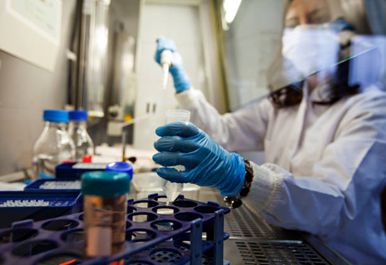
Scientist in a lab coat wearing a mask and blue gloves uses a pipette over a rack of test tubes in a laboratory setup.

Genetic Testing

When azoospermia or severe oligospermia is diagnosed, karyotyping and Y-chromosome microdeletion testing are recommended. This is especially important before pursuing ICSI, as certain genetic conditions can be passed to male offspring.
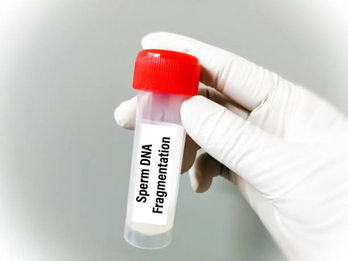
Gloved hand holding a small specimen tube labeled 'Sperm DNA Fragmentation' with a red cap.

Sperm DNA Fragmentation Test

This test — still underused in Indian fertility clinics — measures damage within the sperm’s DNA itself. High DNA fragmentation can explain recurrent IVF failure or recurrent miscarriage even when standard semen analysis looks normal. Dr. Mehta specifically recommends this for couples with unexplained infertility or repeated IVF failures.
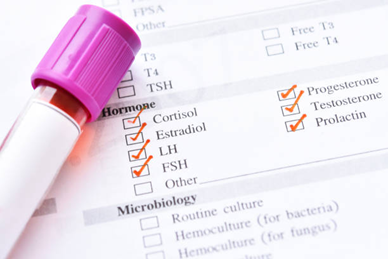
Medical lab form with checkmarks for cortisol, estradiol, LH, FSH, and prolactin; pink-topped sample vial nearby.

Hormonal Profile

Blood tests for FSH, LH, testosterone, prolactin, and TSH help identify whether the cause is hormonal, which is often highly treatable.
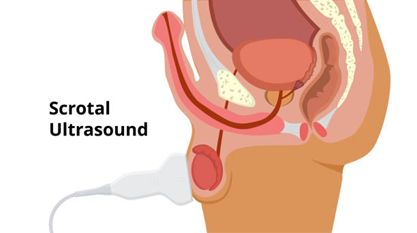
Illustration of a male pelvis showing a scrotal ultrasound probe on the scrotum during the examination.

Scrotal and Testicular Ultrasound

Imaging is used to detect varicocele, obstruction, or testicular abnormalities that a physical exam might miss.
Get a complete male fertility evaluation with advanced testing including semen analysis, hormonal assessment, and sperm DNA fragmentation testing.

Male Infertility Treatment Options

The treatment path depends entirely on what’s causing the problem. Dr. Mehta takes a diagnosis-first approach — which means no guesswork, no repeating what’s already been tried, and no protocol that isn’t built around your specific case.

\

Hormonal and Medical Treatment

When the cause is hormonal, such as low testosterone, elevated prolactin, or thyroid dysfunction, targeted medical treatment can significantly improve sperm parameters over 3–6 months. This is often tried first before moving to assisted reproduction, especially in younger men.
\

IUI (Intrauterine Insemination) for Mild Male Factor

When sperm count or motility is mildly reduced, IUI can be an effective first step. The sperm sample is washed and concentrated in the lab, and the healthiest sperm are placed directly into the uterus at the time of ovulation. This bypasses much of the distance sperm would normally have to travel.
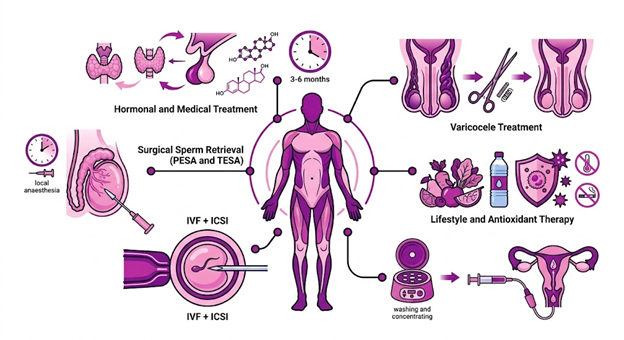
Infographic of male infertility treatments: hormonal and medical therapy, surgical sperm retrieval, IVF with ICSI, varicocele treatment, lifestyle/antioxidant therapy, and semen washing/concentrating.
\

Surgical Sperm Retrieval: TESA and PESA

For men with azoospermia — zero sperm in the ejaculate — sperm can often still be retrieved directly from the testis or epididymis. TESA (Testicular Sperm Aspiration) and PESA (Percutaneous Epididymal Sperm Aspiration) are minimally invasive procedures done under local anaesthesia. The retrieved sperm is used immediately with ICSI. Dr. Mehta achieved the first PESA baby in the Sirsa–Haryana region — a milestone that changed what was possible for azoospermic couples in this part of India.
\

IVF + ICSI (Intracytoplasmic Sperm Injection)

For moderate-to-severe male infertility, ICSI is the gold standard. A single, carefully selected sperm is injected directly into each egg under a high-powered microscope. This completely bypasses the need for sperm to swim or penetrate the egg on its own. Dr. Mehta was a pioneer of ICSI in the Sirsa region and has been performing it for over two decades. [INTERNAL LINK: ICSI Treatment page]
\

Varicocele Treatment

Varicocele is one of the most common and correctable causes of male infertility. Surgical correction (varicocelectomy) or radiological embolisation can improve sperm count and quality in a significant number of cases. Outcomes are best in men under 35 with mild-to-moderate infertility.
\

Lifestyle and Antioxidant Therapy

Oxidative stress is a significant contributor to poor sperm quality. Targeted antioxidant therapy, along with guidance on heat exposure, nutrition, weight, smoking cessation, and alcohol, can support sperm health in parallel with medical treatment. Small changes here genuinely make a difference.

Treatment Options at a Glance

Condition / Factor Recommended Treatment Success Outlook Notes
Low Sperm Count (Oligospermia) IUI or IVF + ICSI Good with ICSI Most responsive to treatment
Nil Sperm Count (Azoospermia) TESA / PESA + ICSI Good if sperm retrieved Surgical sperm retrieval required
Poor Sperm Motility (Asthenospermia) IUI / IVF + ICSI Good with ICSI Sperm selection is key
Abnormal Sperm Shape (Teratospermia) IVF + ICSI Moderate to Good Combined with sperm selection protocols
Hormonal Imbalance (e.g. low testosterone) Hormonal therapy Good with correction Often reversible with treatment
Varicocele Surgical correction Good post-surgery Improves sperm parameters over months

Why Patients Trust Dr. Manisha Mehta for Male Infertility Treatment

Patients who come to Dr. Mehta for male infertility treatment often arrive after months — sometimes years — of feeling like the male side of the equation was being brushed aside. Her approach is different from the start.

\
20+ years of experience in infertility and assisted reproduction, including complex male factor cases
\
Pioneer of the first ICSI baby and PESA baby in the Sirsa–Haryana region
\
Equal evaluation of both partners from the consultation day one
\
Access to full surgical sperm retrieval (TESA/PESA) within the same centre
\
MBBS from Maulana Azad Medical College; MD & DNB from Lady Hardinge Medical College, New Delhi
\
85% IVF success rate — including cases where male infertility was a contributing factor
\
Member of ASRM, ESHRE, FOGSI (Life Member), ISAR, and MNAMS
\
Patients describe her as warm, intuitive, and deeply compassionate — especially around the emotional weight that male infertility can carry

“Every patient’s fertility journey is unique. For the male partner especially, walking through that door takes courage. My job is to make sure they leave with clarity, not more uncertainty.”

— Dr. Manisha Mehta, IVF Doctor in India

Looking for experienced, compassionate fertility care for male infertility? Connect with Dr. Manisha Mehta at 9619642000.

FAQs

Starting IVF?
Here Are the Answers
You’re Looking For

Curious About IVF? Let’s Talk.

Can male infertility be treated completely?
In many cases, yes — especially when the cause is hormonal, related to varicocele, or involves an obstruction that can be surgically corrected. Even when the condition can’t be reversed, treatments like ICSI with surgically retrieved sperm give azoospermic men a genuine chance at fatherhood. The earlier the diagnosis, the broader the options.
Is a semen analysis enough to diagnose male infertility?
It’s an essential starting point, but not always sufficient. Standard semen analysis doesn’t test sperm DNA integrity, and it won’t detect hormonal problems or genetic causes. Dr. Mehta takes a thorough approach — if a semen analysis flags a concern, she goes deeper to find out why.
My sperm count is low. Can I still have children?
Yes, in most cases. Even with a low count, ICSI requires only a single viable sperm per egg. And surgical sperm retrieval (TESA/PESA) means that even men with zero sperm in their ejaculate can often still father biological children. A consultation will help determine what’s realistic for your specific situation.
Does male infertility treatment take a long time?
It depends on the cause. Hormonal treatment and varicocele correction take 3–6 months before sperm parameters improve. IUI and IVF/ICSI cycles can begin within weeks once the workup is complete. Dr. Mehta will be honest with you about timelines so you can plan accordingly.
Can stress or lifestyle really affect sperm?
Genuinely, yes. Chronic stress, poor sleep, obesity, heat exposure (tight clothing, laptops, hot baths), smoking, and excessive alcohol all measurably impact sperm quality. They’re not the only factors — but addressing them in parallel with treatment consistently improves outcomes.
We've had two failed IVF cycles with male factor. What should we do?
Repeated IVF failure — especially with a male infertility component — warrants a fresh look at everything: sperm DNA fragmentation, the stimulation protocol, embryo development, and uterine factors. Dr. Mehta specialises in complex and repeated IVF failure cases.