
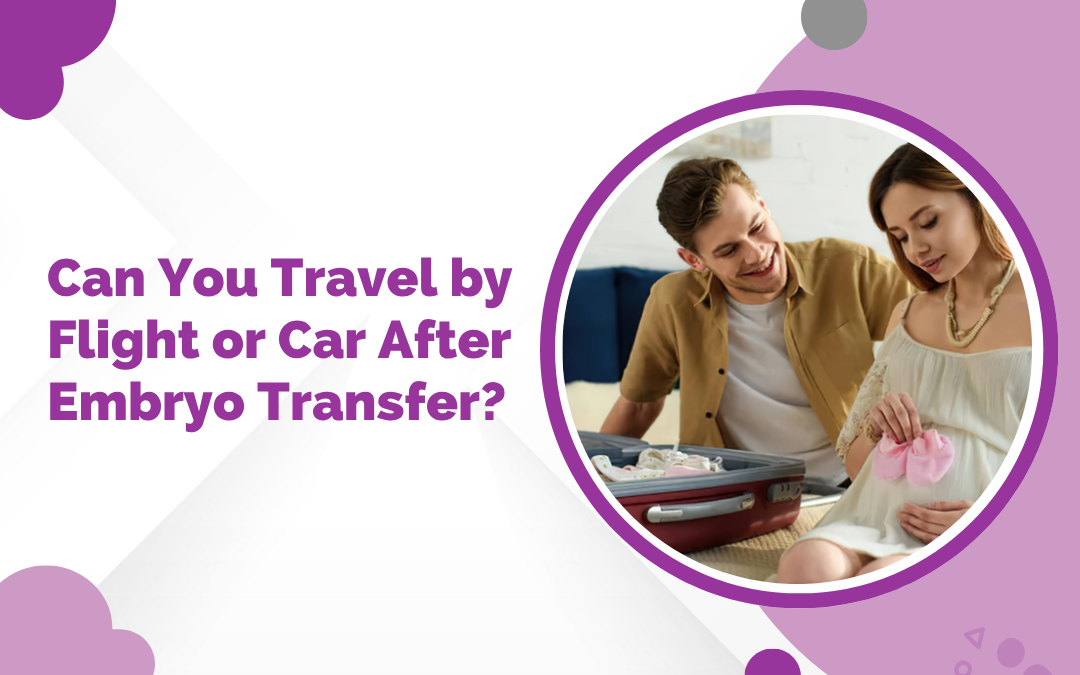
Flying and driving after embryo transfer are both safe according to a 2022 retrospective study of 2,135 embryo transfers that found no difference in pregnancy, implantation, or miscarriage rates between patients who flew home after transfer and those who stayed local. The uterus holds the embryo firmly against the endometrial lining, and no amount of turbulence, road vibration, or cabin pressure change dislodges an embryo that was properly placed during transfer.
According to Dr. Manisha Mehta, IVF Doctor in India, “Half my patients travel from other cities and states for treatment, and the ones who flew home the evening after transfer have the same pregnancy rates as the ones who checked into a hotel and stayed in bed for three days, because the embryo does not know or care whether you are sitting on a plane or lying in a room.”
Is It Actually Safe to Fly After Embryo Transfer?
The belief that flying after transfer is dangerous comes from the same outdated thinking that told patients to stay on bed rest for days after the procedure, and published data has disproven both ideas, but the anxiety persists because patients who spent lakhs on treatment understandably want to eliminate every possible risk even when the risk they are worried about does not actually exist.
- Cabin pressure is not a concern: Airplanes pressurize cabins to simulate 1,800 to 2,400 metres altitude, a range the human body handles without any physiological stress, and the embryo buried inside the endometrial lining experiences none of the pressure variation that the passenger feels in her ears during takeoff because the uterus is a closed fluid-filled environment that buffers external pressure changes completely.
- Turbulence does not dislodge embryos: Patients who grip the armrest during a bumpy landing worrying that the jolt moved their embryo are experiencing anxiety not obstetrics, because the embryo is microscopic and embedded in tissue, and dislodging it would require forces that no commercial flight has ever produced, a fact that fertility doctors working with medical tourism patients across Europe, the Middle East, and India have confirmed through thousands of post-flight positive pregnancy tests.
- DVT is the real concern: Sitting motionless for hours raises the risk of deep vein thrombosis, and IVF patients on estrogen supplementation carry a slightly elevated baseline clot risk, so getting up every 90 minutes, wearing compression socks, staying hydrated, and choosing an aisle seat matters more for safety than anything related to the embryo itself.
- OHSS patients should wait: The one genuine contraindication to immediate post-transfer travel is ovarian hyperstimulation syndrome, because a patient whose ovaries are enlarged and abdomen is distended with fluid should not be sitting in an airplane cabin where medical help is unavailable if symptoms worsen, and patients who hyperstimulated during retrieval should stay near their clinic until the ovaries have settled regardless of how urgently family at home wants them back.
Women who underwent IVF treatment in India at a clinic in a different city can fly home the day after transfer without clinical concern, provided they are not showing signs of OHSS and their clinic has cleared them for travel.
What About Car Travel, Train Journeys, and Long-Distance Road Trips?
Indian patients travelling for IVF face a reality that international guidelines do not always account for, because a patient flying from Delhi to Mumbai after transfer has a two-hour flight in a pressurised cabin while a patient travelling from a district town in Rajasthan to Sirsa has a 6-hour drive on roads where potholes, speed bumps, and erratic truck traffic make the journey physically more demanding than any commercial flight.
- Short drives are fine: Car travel under 3 hours poses zero additional risk after embryo transfer, and patients who drive home from the clinic the same day or the next morning do not need to lie flat in the back seat or avoid speed bumps, because the embryo is not floating loose inside the uterus waiting to be shaken out, it is embedded in tissue that road vibration cannot reach.
- Long drives need breaks: For journeys over 3 hours, stop every 90 minutes to stretch, walk around, use a restroom, and drink water, because the risk is not to the embryo but to the patient’s circulation, and sitting in a cramped car seat for 6 hours on progesterone medication that already causes bloating and sluggish digestion makes the drive unnecessarily miserable.
- Indian Railways is safe: Patients who need to take an overnight train from their treatment city back home can do so without concern about the berth vibration or the rocking of the coach, and sleeping on a train is no different physiologically than sleeping in a hotel room as far as the embryo is concerned, though women stepping up from IUI treatment to IVF who are anxious about their first transfer may feel calmer resting one night before travelling.
- Auto rickshaws and bumpy roads: This is the question that Indian patients actually ask and international fertility blogs never cover, and the answer is that a 20-minute auto rickshaw ride on a potholed road is not going to affect implantation, though if the ride is causing physical pain from ovarian sensitivity post-retrieval the patient should take a cab with better suspension instead.
Travel after transfer is about patient comfort and circulation, not embryo safety, and women managing PCOS and pregnancy concerns who travelled for treatment should focus on hydration, rest, and medication compliance during the journey home rather than worrying about whether the mode of transport is harming their chances. Any good IVF center in India provides travel clearance based on the patient’s OHSS risk and physical recovery rather than applying a blanket travel restriction that published data does not support.
Why Choose Dr. Manisha Mehta?
Dr. Manisha Mehta treats patients from across India who fly and drive to her clinic from other states, and her 85% IVF success rate includes the patients who boarded a flight home the same evening and the ones who stayed in a hotel for three days, because she has tracked outcomes across both groups long enough to know that the mode of transport has nothing to do with whether the embryo implants. Recognised among the best IVF specialists in India for evidence-based post-transfer guidance, she clears patients for travel based on their clinical status rather than outdated bed-rest protocols that the data abandoned years ago.
Call Now: +91 91680 39000
Travelling for IVF and unsure about post-transfer travel plans? Get a personalised travel clearance based on your OHSS risk and recovery status.
Frequently Asked Questions
Can I fly the same day as embryo transfer?
Most patients can fly the same evening or the next morning without any impact on implantation, provided there are no signs of OHSS or other complications requiring proximity to the clinic.
Will road bumps affect my embryo after transfer?
The embryo is embedded in the endometrial tissue, not floating loose in the uterus, and road vibration from normal driving or auto rickshaw rides does not reach or affect it.
How long should I rest before travelling after transfer?
Strict bed rest is no longer recommended, and most clinics allow patients to resume normal light activity and travel within hours of the procedure.
Should I avoid travel if I had OHSS symptoms?
Patients with ovarian hyperstimulation should stay near their clinic until symptoms resolve, as OHSS can worsen with pregnancy hormones and requires accessible medical monitoring.
You deserve answers from a doctor who knows your case.
Whether you are worried about a symptom, overdue for a check-up
I am here, and I am listening.
Talk to Dr. Manisha Mehta. Book Your Consultation Today.
Medically Reviewed by
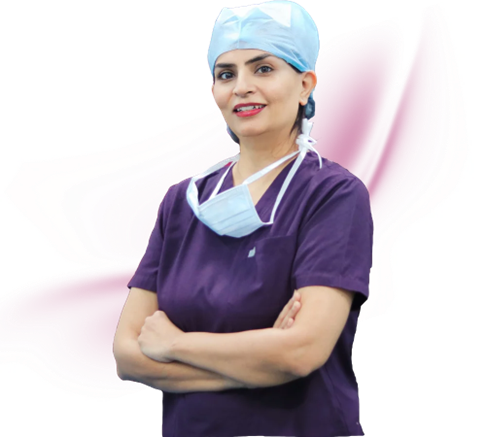
Dr. Manisha Mehta
Gynaecologist & Obstetrics Specialist,IVF Doctor in India
Specialisation: Minimally Invasive Gynaecological Surgery | Women’s Health | Post-Operative CareApex Hospital -Sirsa, Haryana | Serving Delhi NCR, Haryana & surrounding regions
Reference link:
- History of in vitro fertilization in India
https://www.ncbi.nlm.nih.gov/pmc/articles/PMC3657976/ - Assisted reproductive technology in India: current scenario
https://pubmed.ncbi.nlm.nih.gov/30386559/