
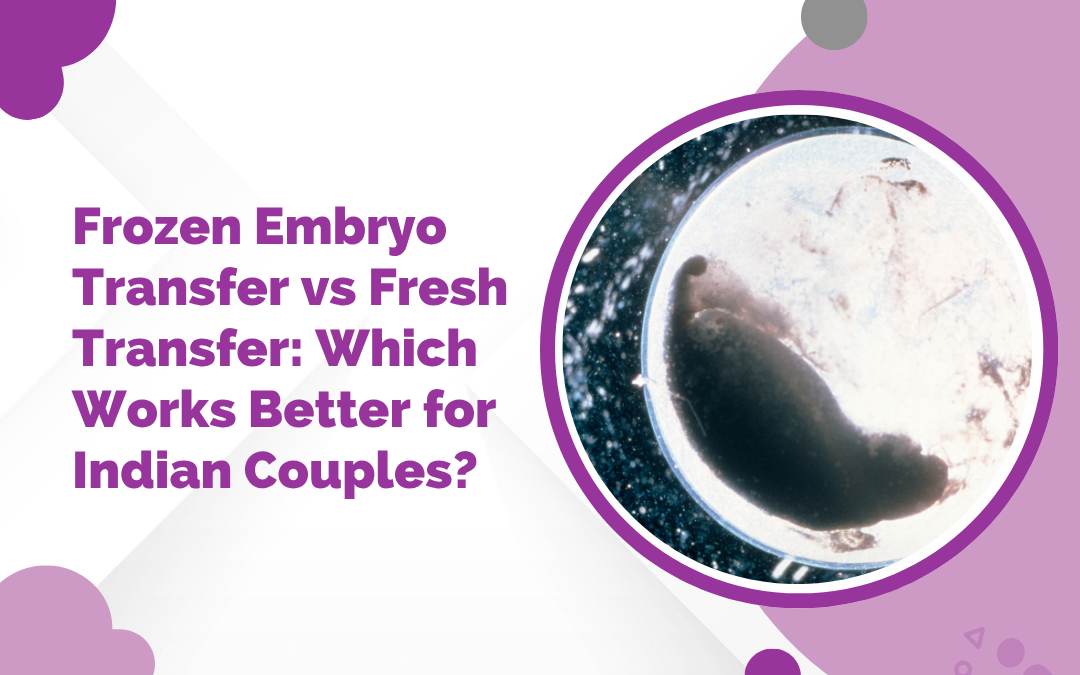
Frozen embryo transfer now matches or exceeds fresh transfer success rates in most patient populations because vitrification technology preserves embryos with over 95 percent survival, and the uterus that receives the embryo has had time to recover from the high hormone levels created by ovarian stimulation rather than trying to accept an embryo while still flooded with the medications used to retrieve the eggs in the first place.
According to Dr. Manisha Mehta, IVF Doctor in India, “Indian couples almost always want the transfer done immediately because the family is watching the calendar and every month feels like a year, but the patients who agreed to freeze and wait consistently had better implantation rates than the ones who insisted on transferring the same cycle because they could not handle telling their in-laws there would be another delay.”
Why Has Frozen Embryo Transfer Become the Preferred Approach?
Ten years ago freezing embryos meant accepting that a third of them might not survive the thaw, and fresh transfer was the default because nobody wanted to gamble with embryos that took so much effort to create. Vitrification changed that equation entirely, and once clinics saw that frozen embryos were surviving at 95 percent and implanting at rates equal to or better than fresh, the conversation around timing shifted from “transfer as fast as possible” to “transfer when the uterus is actually ready.”
- Uterine recovery: The hormones used during ovarian stimulation push estrogen to levels 5 to 10 times higher than normal, and the endometrium developing under those conditions is not the same endometrium that would naturally receive an embryo, and giving the uterus one or two months to return to its baseline hormonal state before putting an embryo back in produces measurably better implantation rates for patients whose bodies were pushed hard during retrieval.
- OHSS prevention: Patients who produce 15 or 20 eggs during stimulation are at genuine risk of ovarian hyperstimulation syndrome, and transferring a fresh embryo into a body already swollen with fluid retention and ovarian enlargement adds pregnancy hormones on top of an already dangerous physiological situation, whereas freezing everything and waiting for the ovaries to calm down eliminates that risk completely without sacrificing a single embryo.
- PGT-A results: Genetic testing takes 7 to 14 days to come back from the lab, and couples who want their embryos screened for chromosomal abnormalities before transfer simply cannot do a fresh cycle because the results arrive long after the transfer window has closed, making freeze-all the only option for patients whose clinical history makes PGT-A worth doing.
- Batch planning: Indian couples financing IVF through personal loans or family contributions often cannot afford a failed cycle, and freezing embryos from the first retrieval gives them multiple transfer attempts from one egg collection without repeating the most expensive and physically demanding part of the process, a financial safety net that fresh-only cycles do not offer.
Women undergoing IVF treatment in India at centres using vitrification now receive freeze-all as the recommended approach for normal and high responders, and the shift has contributed to both higher implantation rates and lower complication rates across the board.
When Does Fresh Transfer Still Make Sense?
The freeze-all enthusiasm has gone far enough that some clinics apply it to every patient regardless of how many embryos they have, and that blanket approach fails the exact population it should be protecting, the low responders who retrieved 2 or 3 eggs and cannot afford to add another month of waiting and another round of medication costs to an already exhausting process.
- Low responders: A patient who retrieved 3 eggs and has 2 embryos on day 3 does not benefit from freezing because the additional cost of a frozen transfer cycle, the extra medication, the extra monitoring, and the extra month of waiting add financial and emotional burden without the implantation advantage that freeze-all provides to patients with 10 or 15 embryos in storage.
- Good endometrium during stimulation: Some patients develop a perfect endometrial lining during stimulation despite the elevated hormones, and an experienced clinician looking at the ultrasound on trigger day can tell whether the lining is receptive enough for a fresh transfer or whether it has the compressed, hyperechoic appearance that signals it needs time to recover before accepting an embryo.
- No PGT-A needed: Younger patients with no history of miscarriage or chromosomal concerns who produce good quality embryos do not always need genetic testing, and for this group a fresh transfer on day 5 with a well-developed blastocyst produces outcomes equivalent to frozen transfer without the additional wait, cost, and medication that a freeze-thaw cycle adds.
- Emotional readiness: Couples who have been trying for years and finally made it through retrieval with viable embryos carry an emotional weight that clinical protocols do not always account for, and for patients stepping up from IUI treatment who are emotionally depleted by the time they reach IVF, the psychological benefit of transferring now rather than waiting another month has real clinical value that cannot be measured on a lab report.
The decision between fresh and frozen is not about one being universally better but about reading the patient in front of you, and women managing PCOS and pregnancy who often hyperstimulate during retrieval almost always benefit from freeze-all while low responders may do equally well with fresh. Any good IVF center in India makes this call from the retrieval outcome and the endometrial scan, not from a clinic policy written before the patient walked through the door.
Why Choose Dr. Manisha Mehta?
Dr. Manisha Mehta has spent 20 years deciding between fresh and frozen for thousands of patients, and her 85% IVF success rate reflects the fact that she reads the retrieval outcome, the endometrial lining, and the patient’s emotional and financial situation before recommending one over the other rather than applying the same freeze-all default to a 26-year-old with 18 eggs and a 40-year-old with 3. Recognised among the best IVF specialists in India for transfer decisions made from clinical data rather than clinic habit, she has done enough fresh transfers in low responders and enough frozen transfers in high responders to know that the protocol that works is the one matched to the patient, not the one that sounds more modern.
Call Now: +91 91680 39000
Going through IVF and unsure whether fresh or frozen transfer is right for your cycle? Get a transfer plan based on your retrieval outcome and endometrial readiness, not a default protocol.
Frequently Asked Questions
Is frozen embryo transfer better than fresh for everyone?
Frozen is better for high responders, OHSS-risk patients, and those needing PGT-A, but low responders with few embryos often do equally well with fresh transfer.
Do frozen embryos survive thawing?
With modern vitrification over 95 percent of embryos survive the thaw intact, a dramatic improvement from the 70 to 80 percent survival rates under older slow-freeze methods.
Does freezing embryos damage them?
Vitrification flash-freezes embryos so rapidly that ice crystals cannot form, preserving cellular integrity at levels comparable to fresh embryos in published implantation data.
Why do some clinics freeze all embryos by default?
The freeze-all strategy improves outcomes for normal and high responders by letting the uterus recover from stimulation, but applying it to every patient regardless of embryo count is not always appropriate.
You deserve answers from a doctor who knows your case.
Whether you are worried about a symptom, overdue for a check-up
I am here, and I am listening.
Talk to Dr. Manisha Mehta. Book Your Consultation Today.
Medically Reviewed by

Dr. Manisha Mehta
Gynaecologist & Obstetrics Specialist,IVF Doctor in India
Specialisation: Minimally Invasive Gynaecological Surgery | Women’s Health | Post-Operative CareApex Hospital -Sirsa, Haryana | Serving Delhi NCR, Haryana & surrounding regions
Reference link:
- History of in vitro fertilization in India
https://www.ncbi.nlm.nih.gov/pmc/articles/PMC3657976/ - Assisted reproductive technology in India: current scenario
https://pubmed.ncbi.nlm.nih.gov/30386559/

The Superjili app is legit. Smooth gameplay, no lag, and I can play anywhere. Makes gaming on the go a breeze. Download it here: superjili app
X666 is a website with some cool stuff on it! You can definitely find what you’re looking for there. Check it out yourself: x666
Hey, checking out the 2ez betting hub! Looks like a solid spot to get your bets in. Good odds and a decent community vibe! Definitely worth a peek. Check it out here 2ez betting hub
Been using ketqua 04 net for a while now and it’s pretty solid. Easy to navigate and find what I’m looking for. ketqua 04 net
W81bet isn’t bad, not bad at all. The site runs smoothly and I haven’t had any lag issues, which is a major plus. You could give it a try at w81bet.
Wim444 is pretty new to me and the bonuses look good so far. I hope they have good payouts! You should take a look at wim444 now.