

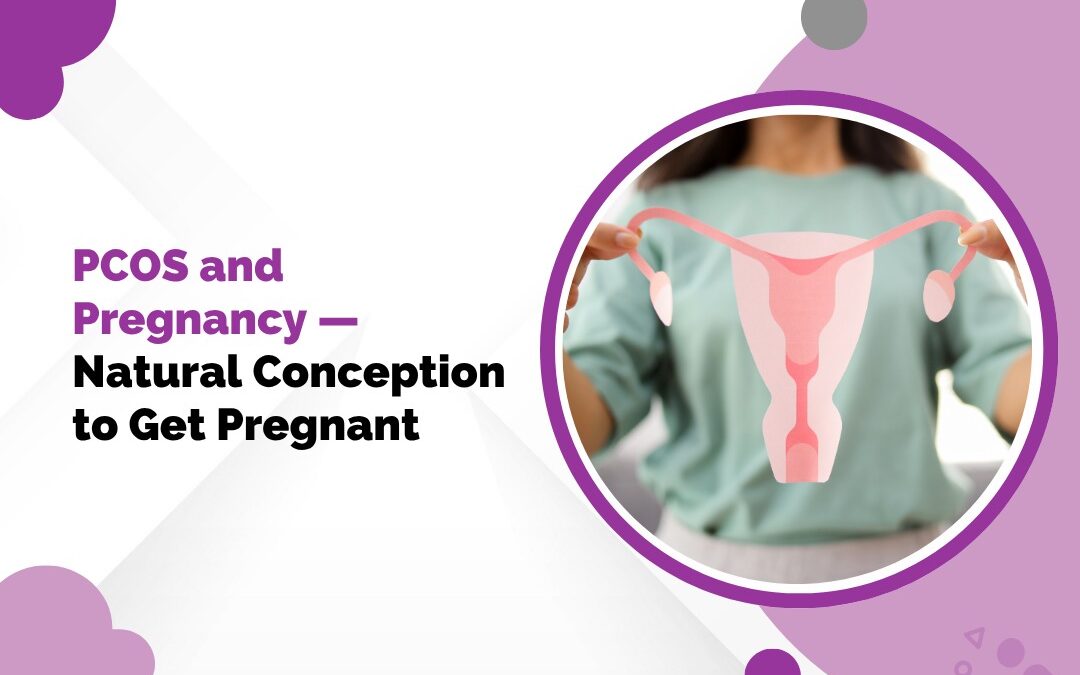
Yes, natural pregnancy with PCOS is possible. PCOS affects 1 in 10 women and is the leading cause of anovulatory infertility, but over 60 percent restore spontaneous ovulation through lifestyle modification alone, and first-line medication like letrozole achieves cumulative live birth rates of approximately 70 percent.
According to Dr. Manisha Mehta, IVF Doctor in India, “PCOS is the diagnosis I see most often in my clinic, and the first thing I tell every patient is that having PCOS does not mean you cannot become a mother.”
Why Does PCOS Make It Harder to Get Pregnant?
Your body isn’t broken, the wiring between your brain and ovaries is just running on a messed up signal and once you understand where the glitch is things start making more sense.
- Anovulation: Your ovaries grow a bunch of small follicles every month but none of them actually finish maturing and release an egg, which means in any month where ovulation didn’t happen pregnancy is literally impossible no matter how well you time things.
- Insulin resistance: More than half of women with PCOS have this whether they’re overweight or skinny, and the tricky part is high insulin quietly pushes androgen levels up which then blocks ovulation in a loop that nobody catches until someone orders the right blood work.
- High androgens: Too much testosterone and DHEA-S floating around messes with how follicles develop and thickens cervical mucus and throws off your lining, so eggs are being produced inside your ovaries but they’re stuck in a hormonal environment that won’t let them grow up properly.
- Weight factor: PCOS and weight gain absolutely feed each other but here’s what everyone gets wrong, lean women with PCOS struggle with ovulation too, so when a doctor tells a thin PCOS patient to just lose weight and come back that’s genuinely useless advice and the real problem hasn’t been touched.
Understanding what’s actually blocking ovulation is the whole game, and couples working with a specialist for IVF treatment in India don’t always end up needing IVF because sometimes fixing the PCOS itself gets you pregnant without any of the expensive stuff.
What Actually Helps You Get Pregnant with PCOS?
There’s a proper order to this and most women don’t know it because nobody walks them through the steps before throwing medications at them.
- Lifestyle first: Better food, regular movement, decent sleep, and if you’re carrying extra weight even a 5 to 10 percent drop can restart ovulation on its own, and the data says over 60 percent of PCOS women start ovulating again within three to six months just from this which honestly surprises most people when they hear it.
- Letrozole: This replaced clomiphene as the first line drug for PCOS a few years ago because it works better without thinning the uterine lining, and if your doctor is still reaching for clomiphene first without even mentioning letrozole that tells you they haven’t updated their approach in a while.
- Track ovulation: Yes your cycles are irregular and yes that makes tracking harder, but it’s not impossible with OPK strips or basal temperature or ultrasound monitoring, because some PCOS women ovulate on day 20 or day 35 instead of day 14 and the cycle is longer not missing.
- IUI or IVF: When three to four medicated cycles haven’t worked IUI treatment is the logical next move, and IVF with ICSI treatment only makes sense if oral meds completely failed or there’s a male factor on top or age is becoming a real concern, but jumping straight to IVF for PCOS without trying the simpler cheaper options first is something no good doctor should be doing.
The best IVF specialist in India will walk you through this sequence honestly and won’t skip to the expensive option just because it’s faster for them.
Why Consult Dr. Manisha Mehta?
Dr. Manisha Mehta has been doing this for over 20 years. 85% IVF success rate across the hard cases. Repeated failures. Low AMH. Male factor. Uterine problems. She’s worked through all of it, and she still takes the time to go through every failed cycle report before suggesting the next step. Patients come in from across the country after being told there’s nothing left to try. A good number of them are parents now. That only happens when someone actually investigates, rather than running another round and hoping something different happens.
Call Now: +91 91680 39000
Your recovery is personal. Let us keep it that way.
Book Your Personal Post-Op Review with Dr Manisha Mehta
Frequently Asked Questions
1. Can you get pregnant naturally with PCOS without medication?
Yes, over 60 percent of PCOS women restore ovulation through lifestyle changes alone.
2. What is the best fertility drug for PCOS?
Letrozole is the recommended first line now because it works better than clomiphene for PCOS.
3. Does PCOS increase pregnancy complications?
Yes, higher risk of gestational diabetes, preeclampsia, and larger than average birth weight babies.
4. When should a PCOS patient consider IVF?
Only after oral medications and IUI have both failed or if age and additional factors demand faster action.
You deserve answers from a doctor who knows your case.
Whether you are worried about a symptom, overdue for a check-up
I am here, and I am listening.
Talk to Dr. Manisha Mehta. Book Your Consultation Today.
Medically Reviewed by

Dr. Manisha Mehta
Gynaecologist & Obstetrics Specialist,IVF Doctor in India
Specialisation: Minimally Invasive Gynaecological Surgery | Women’s Health | Post-Operative CareApex Hospital -Sirsa, Haryana | Serving Delhi NCR, Haryana & surrounding regions
- Polycystic ovary syndrome (PCOS) and fertility
https://www.nichd.nih.gov/health/topics/pcos/conditioninfo/fertility - Letrozole versus clomiphene for infertility in PCOS
https://pubmed.ncbi.nlm.nih.gov/25006718/


The phdream app download was a breeze, seriously. No crazy hoops to jump through. Pretty happy with the whole setup process.
Plot777 Casino, huh? Never heard of it before, but I’m always down to trying new online casinos. Any good? Worth a spin? More information at plot777 casino.
Just signed up for okbet.168. The interface is pretty clean, and the games seem decent. We’ll see if it’s a keeper. Wish me luck! okbet.168!