

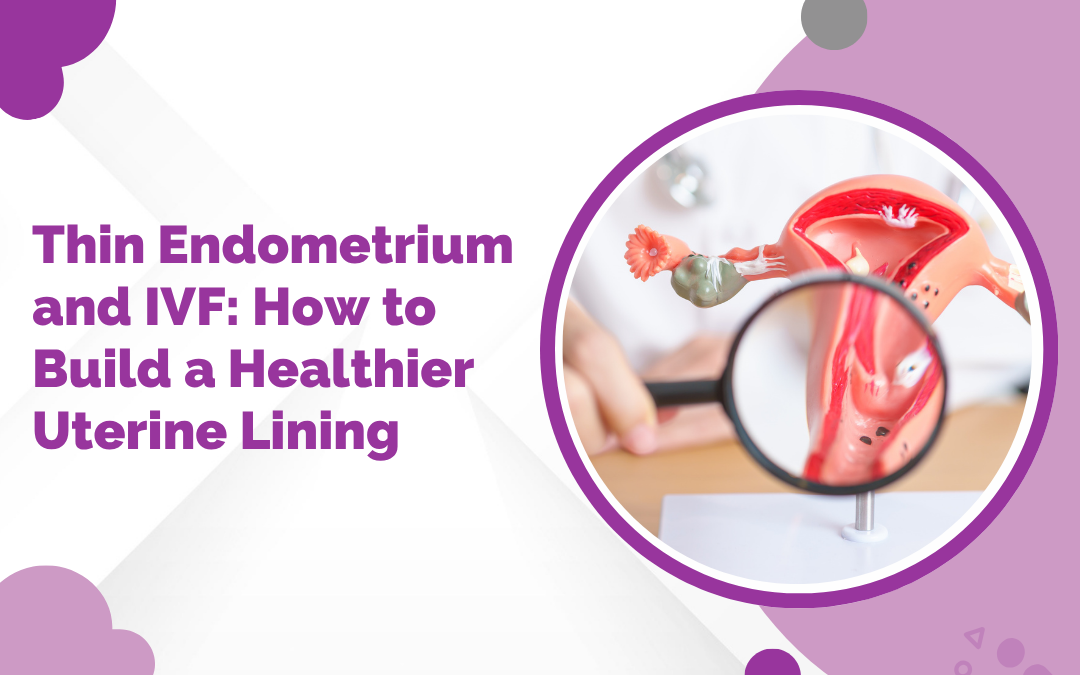
Endometrial thickness below 7 mm at the time of embryo transfer drops IVF pregnancy rates from approximately 31 percent to 7 percent because the embryo needs a sufficiently developed lining to implant into, and a thin endometrium does not provide the blood supply, glandular secretions, or structural depth for the embryo to embed and survive. Pregnancies have been reported at linings as thin as 4 mm, but those are exceptions clinics cite to keep patients hopeful rather than outcomes anyone should plan a cycle around.
According to Dr. Manisha Mehta, IVF Doctor in India, “The patients with thin lining are the ones whose cycles get cancelled the most, sometimes three or four times before anyone transfers a single embryo, and watching a woman go through weeks of hormones only to hear on monitoring day that her lining is 5.5 mm again and the cycle is off produces a specific kind of exhaustion that patients with other fertility problems do not experience in quite the same way.”
Why Does the Endometrium Stay Thin Despite Estrogen Treatment?
The assumption that adding more estrogen will make the lining grow thicker works for roughly 70 percent of patients, and for the remaining 30 percent the lining plateaus at 5 or 6 mm regardless of how many milligrams the doctor prescribes, because the problem is usually not the hormone itself but something that happened to the uterus before the patient ever walked into a fertility clinic.
- D&C damage years earlier: A curettage after miscarriage or abortion scrapes the inner uterine wall, and if the basal layer gets damaged during that procedure the endometrium loses its ability to regenerate properly in future cycles, which is relevant because D&C is extremely common in Indian obstetric practice and the woman sitting in a fertility clinic half a decade later with a lining stuck at 5 mm was almost never told at the time that the procedure carried this specific long-term consequence.
- Adhesions hiding inside the cavity: Asherman’s syndrome sounds like a rare condition until you start performing hysteroscopies on every thin-lining patient and discover bands of scar tissue holding sections of the uterine walls together in roughly a third of them, reducing the actual surface area available for lining development far more than the thickness measurement on ultrasound alone would suggest.
- Blood supply as the real bottleneck: Estrogen tells the endometrium to grow but blood delivers the raw materials to make that growth happen, and women with small uterine arteries, chronic vascular conditions, or surgical history that disrupted the uterine blood supply can have perfectly optimised estrogen levels and still watch their lining plateau cycle after cycle because the delivery system rather than the hormonal signal is what is actually failing.
- Clomiphene did some of this quietly: Clomiphene citrate thins the endometrium as a side effect in certain patients, and women who took it for 4 or 6 ovulation induction cycles before stepping up to IUI treatment or IVF sometimes arrive at the fertility clinic with a lining problem the previous medication contributed to without anyone having mentioned that particular risk at the time of prescribing.
Women with thin endometrium preparing for IVF treatment in India need the cause identified before treatment starts, because the approach for scarring is hysteroscopic surgery while the approach for poor blood flow is vascular medication, and treating both identically wastes cycles that thin-lining patients cannot afford to lose.
What Actually Works When the Lining Refuses to Grow?
Thin endometrium is one of the hardest problems in reproductive medicine to solve, which is not something clinics advertise but is something every experienced fertility doctor knows from watching patients cycle through the same estrogen protocol three times before anyone escalates to the next intervention, and the difference between a clinic that repeats and a clinic that escalates is often the difference between a patient who gives up and one who eventually transfers.
- Stacking estrogen routes and extending the timeline: Oral estrogen alone is insufficient for resistant cases, and adding vaginal estrogen plus transdermal patches simultaneously gives the endometrium three delivery routes while extending the estrogen phase from the standard 14 days to 21 or even 28 days gives a slow-responding lining the additional time it needs, because the patient whose ultrasound read 5.5 mm at day 14 and 7.2 mm at day 21 owes her transfer to that extra week her doctor was willing to wait rather than reaching for the cancellation form.
- Vaginal sildenafil sounds absurd but the data is real: Sildenafil is the same compound in Viagra, and administered vaginally it dilates uterine blood vessels and increases the blood supply reaching the endometrial tissue, and patients react with genuine confusion when they see the prescription but the mechanism is entirely vascular with published data showing increased uterine artery flow and endometrial thickness in women whose lining had not responded to estrogen alone, making the awkwardness of the drug name a negligible trade-off for a lining that finally crosses 7 mm.
- PRP infusion for the cases that resist everything else: Platelet-rich plasma infused directly into the uterine cavity delivers growth factors to the endometrial surface, and a study of 56 patients whose cycles had all been previously cancelled for thin lining found that 98 percent showed significant thickness improvement from an average of 6.5 mm to 8.5 mm with a 36 percent pregnancy rate, numbers that carry particular weight for women who had been told by their previous clinic that their uterus was the reason they could not carry a pregnancy.
- Pentoxifylline and vitamin E for chronic cases: 800 mg pentoxifylline plus 1000 mg vitamin E daily for 3 to 6 months improves microvascular blood flow and has been shown to reverse fibrosis in endometrial tissue damaged by surgery or radiation, and this is not a quick fix but a long-term vascular rehabilitation strategy for patients whose thin lining has resisted every short-term intervention, requiring patience that is difficult to maintain after years of cancelled cycles but offering a path forward for women who have exhausted the faster options.
Thin endometrium turns IVF into a two-part problem where the embryo might be perfect but the place it needs to land is not ready, and women managing PCOS and weight loss alongside thin lining from years of clomiphene use face both ovulatory and endometrial barriers simultaneously. Any good IVF center in India evaluates lining across multiple cycles and escalates interventions sequentially rather than cancelling repeatedly on the same estrogen-only protocol that already failed.
Why Choose Dr. Manisha Mehta?
Dr. Manisha Mehta has treated thin endometrium across 20 years using every intervention from extended estrogen stacking to PRP intrauterine infusion, and her 85% IVF success rate includes patients who had been cancelled 3 or 4 times at other clinics before her sequential escalation protocol finally pushed the lining past 7 mm and produced a transfer that resulted in a pregnancy. Recognised among the best IVF specialists in India for escalating the approach rather than repeating the same failed protocol, she treats thin lining as a clinical puzzle with a specific solving sequence rather than a permanent limitation the patient should accept.
Call Now: +91 91680 39000
Had cycles cancelled for thin lining and unsure what else can be done? Get an assessment that identifies the cause and builds a sequential plan instead of repeating the same protocol that already failed.
Frequently Asked Questions
What thickness does the endometrium need for embryo transfer?
Most clinics aim for 7 mm or above, though pregnancies have occurred at lower thicknesses and there is no absolute cutoff below which implantation becomes impossible.
Can thin endometrium be caused by previous surgery?
D&C procedures and any intervention that damages the basal endometrial layer can permanently reduce the lining’s regenerative capacity in future cycles.
Does Viagra actually help build uterine lining?
Vaginal sildenafil improves uterine artery blood flow and increases endometrial thickness in patients whose lining did not respond to estrogen alone, through a vascular mechanism unrelated to its more widely known use.
How many cancelled cycles should I accept before seeking a second opinion?
If 2 or 3 cycles have been cancelled on the same estrogen-only protocol without escalation to sildenafil, PRP, or pentoxifylline, seeking a different clinical perspective is reasonable.
You deserve answers from a doctor who knows your case.
Whether you are worried about a symptom, overdue for a check-up
I am here, and I am listening.
Talk to Dr. Manisha Mehta. Book Your Consultation Today.
Medically Reviewed by

Dr. Manisha Mehta
Gynaecologist & Obstetrics Specialist,IVF Doctor in India
Specialisation: Minimally Invasive Gynaecological Surgery | Women’s Health | Post-Operative CareApex Hospital -Sirsa, Haryana | Serving Delhi NCR, Haryana & surrounding regions
Reference link:
- Thin Endometrium Treatment Strategies in IVF – Reproductive Biology and Endocrinology
- PRP Intrauterine Infusion for Thin Endometrium – Journal of Human Reproductive Sciences


Alright, bdggameonlinelogin is kinda new on my radar. But hey, new games are always worth checkin’ out. Looks promising. Give it a shot here: bdggameonlinelogin
I’m checking ketqua net 9 for the latest. I really hope to win something today! Just keeping my fingers crossed and hoping for the best. Yeah! ketqua net 9
Hey guys, if you’re looking for a new spot, ‘888 bet’ isn’t bad at all. Good options, and feels pretty smooth to use. Check out 888 bet