

ICSI Treatment in India
ICSI (Intracytoplasmic Sperm Injection) is a breakthrough fertility treatment that involves injecting a single sperm directly into an egg to achieve fertilization. It is a highly effective procedure used primarily for cases of male infertility, where sperm quality or motility is a concern. Dr. Manisha Mehta, a leading IVF doctor in India, specializes in ICSI treatment and provides personalized care to ensure optimal outcomes for each patient.
“Fertility treatments like ICSI go beyond just the science; they require a compassionate, tailored approach to ensure every couple’s needs are addressed at each stage of their journey,” says Dr. Manisha Mehta.
With over 20 years of experience in reproductive medicine, Dr. Mehta combines the latest scientific advancements with compassionate care, ensuring patients receive the highest standard of treatment.
What Is ICSI and How It Works
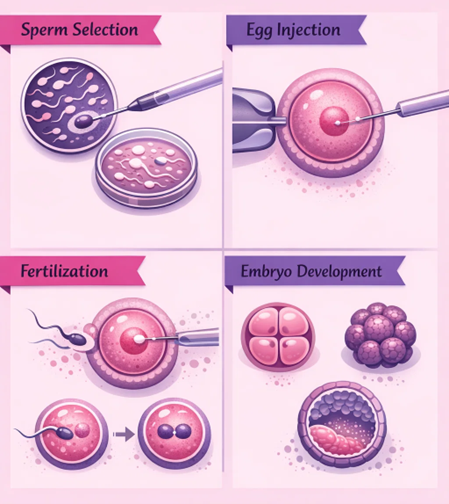
ICSI is an advanced form of IVF treatment in India that specifically targets male infertility. The procedure involves:
Sperm Selection: A single sperm is carefully selected, based on its quality, to maximize the chances of successful fertilization.
Egg Injection: The selected sperm is injected directly into the egg using a fine needle under a microscope.
Fertilization: After the sperm is injected, the fertilized egg is monitored for successful cell division.
Embryo Development: The resulting embryos are then cultured and monitored for quality before being transferred into the uterus.
ICSI for male infertility is used when traditional IVF is not an option due to issues such as low sperm count, poor sperm motility, or blockage in the male reproductive tract.
Who Is the Right Candidate for ICSI
ICSI treatment in India can be recommended for individuals or couples facing specific male infertility challenges, including:
Low Sperm Count: When sperm quantity is too low for natural fertilization or traditional IVF.
Sperm Morphology Issues: When sperm shape is abnormal, reducing the likelihood of natural fertilization.
Previous IVF Failures: When traditional IVF has failed due to male infertility issues.
Poor Sperm Motility: When sperm are unable to swim properly to fertilize the egg.
Male Factor Infertility: When male infertility is the primary cause of difficulty in conception.
Ready to explore your options for ICSI treatment in India?
Book a consultation with Dr. Manisha Mehta today to discuss your personalized treatment plan for ICSI for male infertility.
ICSI Treatment Procedure
Here’s an overview of the ICSI treatment process:

1. Pre-Treatment Assessment
- Comprehensive evaluation of the male and female partners’ reproductive health.
- Hormonal tests, ultrasound, and semen analysis.

2. Ovarian Stimulation
- The female partner undergoes ovarian stimulation with medications to produce multiple eggs.

3. Egg Retrieval
- Eggs are retrieved under mild sedation.

4. Sperm Collection and Selection
The male partner provides a sperm sample, from which a healthy sperm is selected for ICSI.

5. ICSI Procedure
A single sperm is injected directly into each egg.

6. Embryo Culture and Monitoring
Fertilized embryos are cultured and monitored for development.

7. Embryo Transfer
- Healthy embryos are transferred into the uterus.

Potential Risks and Limitations of ICSI
While ICSI is a highly effective treatment, it’s important to be aware of the potential risks and limitations:
Increased Risk of Multiple Pregnancies: If multiple embryos are transferred, there’s an increased risk of twins or triplets.
Egg Damage: The delicate process of injecting sperm into the egg can sometimes cause damage to the egg.
Genetic Risks: As ICSI involves direct manipulation of sperm, some studies suggest a higher risk of genetic abnormalities, particularly in cases of male infertility.
Emotional and Financial Costs: Fertility treatments can be emotionally and financially taxing. It’s important to set realistic expectations and understand the emotional toll of the process.
Success rates depend on various factors like the quality of sperm and eggs, the presence of any underlying health conditions, and the overall health of the couple.
ICSI Success Rates in India by Age
The success rate of ICSI treatment in India can vary based on factors such as age, sperm quality, and overall health. However, here’s an overview of typical success rates:
Age Group | Typical Success Rate | Factors Impacting Success |
Under 35 Years | 45-55% | Higher egg quality, better ovarian reserve, healthy sperm quality |
35-40 Years | 40-50% | Slight decline in egg quality, ovarian reserve starts to decrease |
Over 40 Years | 30-40% | Lower egg quality, reduced ovarian reserve, increased chances of complications |
Success rates depend on various factors like the quality of sperm and eggs, the presence of any underlying health conditions, and the overall health of the couple.
ICSI Treatment Cost in India
The ICSI cost in India can vary depending on factors such as:
Location and Hospital: Costs vary across different cities and hospitals.
Procedure Complexity: Additional treatments like egg retrieval or sperm extraction may increase the cost.
Medications: Ovarian stimulation medications, supplements, and other prescriptions add to the overall cost.
Additional Services: Fertility preservation, genetic testing, or embryo freezing may also incur additional fees.
The ICSI treatment cost in India is typically more affordable compared to other countries, making it a popular choice for both domestic and international patients seeking fertility treatments.
Watch our Videos
Listen Podcasts
Want more fertility insights? Connect with us on social media for expert tips and patient stories.

For over 25 years, Dr. Manisha Mehta and Dr. R.K. Mehta of Apex Hospital have helped couples experience the joy of parenthood through advanced fertility care and trusted medical guidance. Through The Fertility Couple, they reach millions every month, with educational videos that receive over 3 million YouTube views on average, helping people better understand fertility, reproductive health, and treatment options.
Stay connected with The Fertility Couple on Youtube:
FAQs
Starting IVF?
Here Are the Answers
You’re Looking For
Curious About IVF? Let’s Talk.

Mail Us
apexmedia2001@gmail.com

Call Now
9619642000
1. What is the success rate of ICSI treatment in India?
The ICSI success rate in India varies but typically ranges from 45-55% for women under 35 years of age.
2. Who is a good candidate for ICSI?
ICSI for male infertility is ideal for men with low sperm count, poor sperm motility, or abnormal sperm morphology.
3. How is ICSI different from IVF?
ICSI is a form of IVF where a single sperm is injected directly into an egg, used primarily for cases involving male infertility.
4. What are the costs associated with ICSI treatment in India?
The ICSI cost in India varies depending on location, hospital, and specific treatment needs.
5. Are there any risks associated with ICSI treatment?
While ICSI is highly effective, it carries risks such as multiple pregnancies, egg damage, and potential genetic risks.
Looking for expert ICSI treatment in India?
Book a consultation with Dr. Manisha Mehta today to discuss your fertility options.
