
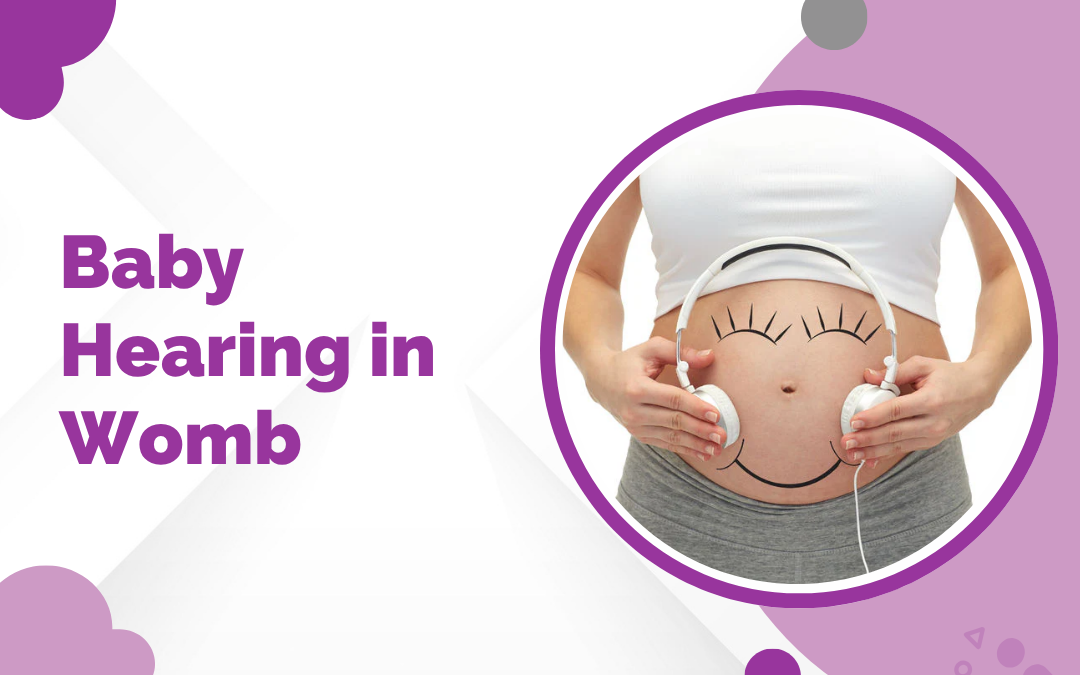
Babies develop auditory structures by week 16 of pregnancy and actively respond to external voices and music by week 23 to 24, with research confirming that newborns only hours old can distinguish their mother’s voice from a stranger’s and differentiate their native language from a foreign one. Garbh Sanskar, the ancient Indian practice of shaping the baby through the mother’s thoughts, sounds, and emotions during pregnancy, is now backed by prenatal neuroscience and epigenetic research.
According to Dr. Manisha Mehta, IVF Doctor in India, “I tell every pregnant patient that the nine months before birth are not just about growing a body but about building a brain, and the sounds and emotions surrounding that baby during this period leave impressions that last well beyond delivery.”
When Does a Baby Start Hearing Inside the Womb?
The cochlea and auditory nerve begin forming around week 8 to 10, which means by the time most women in India even announce their pregnancy to the extended family the baby’s hearing apparatus is already under construction.
- First sounds: Around week 16 the baby picks up vibrations from inside the mother’s body, and the sound it hears most is her heartbeat, which explains something every delivery room nurse has seen, a crying newborn going completely silent the moment it is placed on the mother’s chest.
- Voices break through: By week 23 the baby’s heart rate visibly changes on the monitor when the mother talks or laughs, and fathers can be heard too because the deeper male voice travels through the abdominal wall more easily than most people assume.
- Recognition kicks in: From week 27 the baby turns toward familiar sounds and calms when it hears repeated patterns, and the Abhimanyu story from the Mahabharata feels less like mythology when you read the 2013 study showing newborns recognised lullabies played throughout pregnancy within hours of birth.
- Language wiring: A newborn barely one hour old distinguishes its mother tongue from a foreign language, and the 2.5 lakh neurons forming every minute wire themselves around whatever sounds reach the baby, the aarti in the house, the mother-in-law arguing about names, the auto rickshaw outside, all of it shaping how this child’s brain organises language before its first breath.
Women who conceived through IVF treatment in India carry the same neurologically responsive baby as any natural conception, and starting Garbh Sanskar from the second trimester benefits every pregnancy regardless of how it began.
How Does Garbh Sanskar Actually Shape the Baby’s Brain?
80 percent of brain development happens before birth, and Indian grandmothers who insisted pregnant bahus listen to bhajans, avoid violent television, and stay away from family arguments were practicing prenatal neuroscience decades before any Western researcher published a paper confirming they were right.
- Music and ragas: Ragas work better than random Spotify playlists for fetal brain development because their repetitive melodic structures give the baby consistent patterns to encode, and a European study confirmed newborns actually remembered lullabies from the womb, which means Balaji Tambe Garbh Sanskar music is doing exactly what it claims.
- Garbh Samvad: A mother talking to her belly while rolling rotis, telling the baby which relative it looks like on the ultrasound, or reading a story before bed all count as meaningful auditory exposure, and babies who received this daily interaction from week 24 showed stronger language milestones in their first year.
- Emotional transfer: When the mother laughs oxytocin crosses the placenta and reaches the baby within minutes, and when she fights with someone cortisol does the same thing producing fetal heart rate spikes, which is why the joint family tradition of keeping a pregnant woman happy is not old-fashioned coddling but a biochemically accurate strategy.
- Epigenetic marks: Stress and nutrition during pregnancy leave chemical markers on fetal DNA influencing the child’s health for years, and women managing PCOS during pregnancy benefit especially because cortisol from hormonal imbalance adds to the metabolic load the baby is already navigating.
Starting Garbh Sanskar requires no equipment or paid classes, just daily talking, singing, and keeping the emotional environment as calm as the household allows. Any good IVF center in India now incorporates prenatal bonding guidance alongside standard monitoring.
Why Choose Dr. Manisha Mehta?
Dr. Manisha Mehta has over 20 years guiding women through pregnancy from conception to delivery with an 85% IVF success rate, and she integrates Garbh Sanskar counseling into her prenatal care because she has seen the difference it makes in maternal stress levels, delivery outcomes, and early infant bonding. Recognised among the best IVF specialists in India for her holistic approach, she treats pregnancy as a neurological event for the baby as much as a physical one for the mother.
Call Now: +91 91680 39000
Your recovery is personal. Let us keep it that way.
Book Your Personal Post-Op Review with Dr Manisha Mehta
Frequently Asked Questions
1. When should I start Garbh Sanskar during pregnancy?
Start from the second trimester when the baby’s auditory system develops, though maintaining a positive emotional environment benefits the baby from conception.
2. Can the father's voice also reach the baby in the womb?
The baby recognises the father’s deeper voice from week 24 onward and shows calming responses to familiar male voices after birth.
3. Is there scientific proof that Garbh Sanskar works?
Prenatal neuroscience and epigenetic research confirm that fetal hearing, memory, and brain development respond directly to sounds and maternal emotional state.
4. Does Garbh Sanskar help IVF pregnancies?
IVF babies develop neurologically identically to naturally conceived babies, and Garbh Sanskar benefits every pregnancy regardless of conception method.
You deserve answers from a doctor who knows your case.
Whether you are worried about a symptom, overdue for a check-up
I am here, and I am listening.
Talk to Dr. Manisha Mehta. Book Your Consultation Today.
Medically Reviewed by

Dr. Manisha Mehta
Gynaecologist & Obstetrics Specialist,IVF Doctor in India
Specialisation: Minimally Invasive Gynaecological Surgery | Women’s Health | Post-Operative CareApex Hospital -Sirsa, Haryana | Serving Delhi NCR, Haryana & surrounding regions
Reference link:
- Fetal hearing and response to sound in utero
https://pubmed.ncbi.nlm.nih.gov/12756360/ - Prenatal auditory learning and memory in the human fetus
https://www.ncbi.nlm.nih.gov/pmc/articles/PMC3113350/

Как часто нужно менять [url=https://vpn-1.ru]впн[/url]-сервер для лучшей анонимности?
If you’re looking for up-to-date lottery results, kq net 9 is the place to be. Quick, simple, and gets the job done. Give it a try: kq net 9
Alright, time to see what this vip ph club is all about. Hoping it’s worth the hype! Dive in and see for yourself: vip ph club
Spending some time on luk88 .fun, its great, I like it! You can go to luk88 .fun
https://farmaciabesurica.shop/# Farmacia Besurica
farmacia online Italia: Farmacia Besurica – acquisto farmaci a domicilio Italia